
The Bang That Stops You Cold
It usually happens on an ordinary morning. You hit the opener button on your way to work, and instead of the smooth hum you're used to, there's a loud bang from somewhere above the door, then silence. The door won't move. Or maybe it moves a few inches and stops, heavy and stubborn, like something inside has given up. If you look up at the horizontal bar above the door, you might see a gap in the coil where there shouldn't be one. That's a broken spring, and it's one of the most dangerous repairs in the average home.
Why a Garage Door Spring Is Not Like a Screen Door Hinge
Most people don't think twice about replacing a hinge, a faucet, or even a light fixture. A garage door spring is different because of what it's actually doing: storing enormous mechanical tension to counterbalance a door that can weigh 130 to 400 pounds. A torsion spring (mounted on a bar above the door) can hold the equivalent of hundreds of pounds of force wound into a tight coil. An extension spring (running along the horizontal tracks) works under similar tension, just stretched instead of twisted.
When that spring is intact and properly wound, it's doing its job quietly. When it's being installed, removed, or adjusted, all of that stored energy has nowhere controlled to go unless you're using the right tools and know exactly what you're doing.
What Actually Goes Wrong
The injuries that send people to the emergency room from spring work aren't freak accidents. They follow a predictable pattern:
- Winding bars slipping. Torsion springs are wound using special steel winding bars. A makeshift tool like a screwdriver or an ill-fitting rod can slip out mid-wind, releasing the coil violently toward the person holding it.
- Misjudging the tension. Without a torque wrench and the manufacturer's exact turn count, it's nearly impossible to know how much the spring is already wound or how many turns it needs. Over-tightening or releasing it unevenly can snap the spring apart.
- The door itself falling. If someone disconnects or removes a spring without first securing the door with locking pliers or clamps on the tracks, the full weight of the door can drop suddenly, crushing hands, feet, or anything underneath.
- Flying metal. A spring under tension that fails doesn't just fall apart, it can send pieces across the garage with enough force to break bone or cause deep lacerations.
These aren't rare worst-case scenarios. They're the standard way these injuries happen, which is why professional installers treat every spring as if it's live.
Why Wisconsin Winters Raise the Stakes
Cold weather doesn't just make the job unpleasant, it makes it more dangerous. Steel becomes more brittle in deep cold, and a spring that's already fatigued from years of cycling can fail more abruptly in sub-zero temperatures than it would in July. Add in a homeowner trying to get the door working again quickly because there's snow in the forecast or the driveway is already a sheet of ice, and the conditions are set for rushed decisions. Rushing is exactly what spring work punishes.
Spring and fall are also when a lot of these failures show up, simply because the door has been working hard all year and the temperature swings during thaw and refreeze cycles stress the metal further. If your spring lets go in October, it's often the first sign of fatigue that's been building for a while, not a one-off fluke.
What You Can Safely Check Yourself
You don't have to leave the door untouched entirely. There's useful information you can gather without going near the spring itself:
- Look at the spring from a safe distance (door closed, power to the opener disconnected) and note whether it's a single torsion spring above the door or a pair of extension springs along the tracks.
- Check whether the gap in a broken torsion spring is clean and even, which tells a technician it sheared rather than partially failed.
- Listen for grinding or popping sounds in the weeks before a full break. Early noise is often the spring telling you it's close to failing.
- Keep the door closed and leave the opener disconnected until a technician arrives. Don't try to force the door up manually if it feels unusually heavy.
None of this requires touching the spring, and all of it helps a technician diagnose the problem faster when they arrive.
When to Call Portage Garage Door
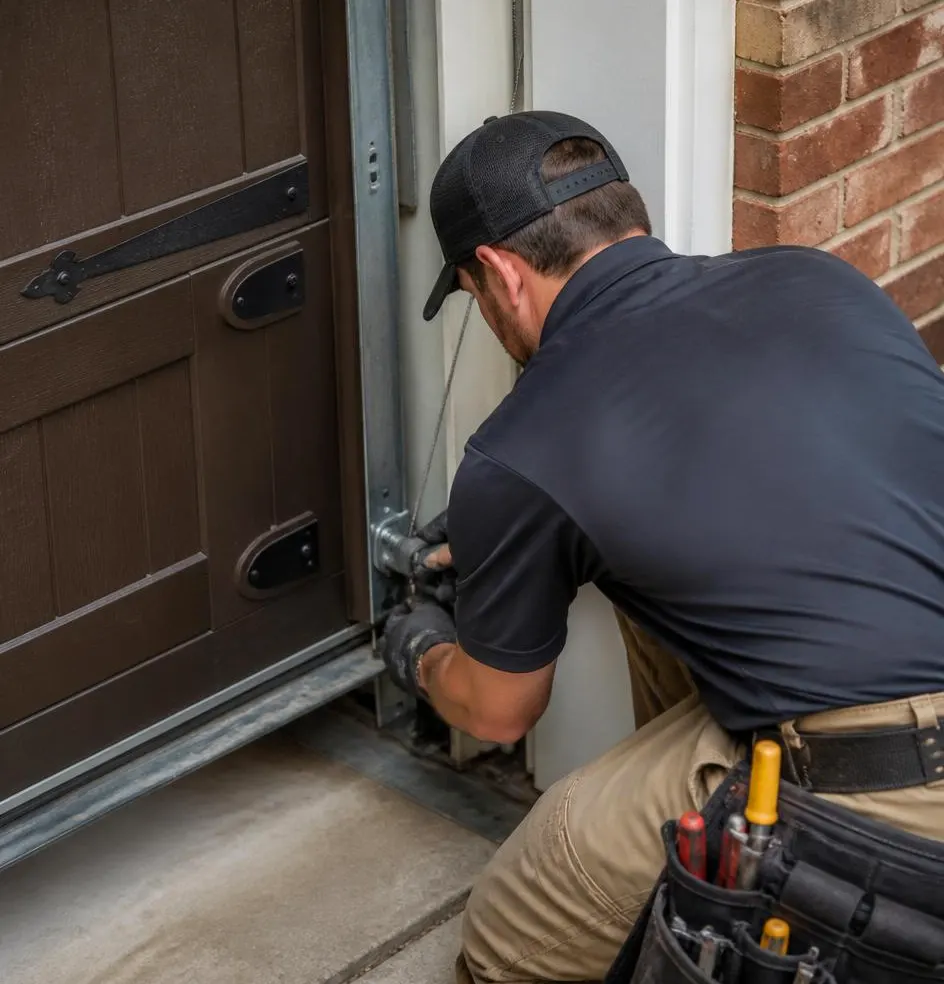
If you hear that bang, see a gap in the coil, or notice the door getting harder to lift by hand, it's time to call. Portage Garage Door handles spring replacement with the right winding bars, torque specifications, and clamps to secure the door safely before any tension is released. If the spring let go overnight or on a weekend when the forecast calls for snow, their emergency garage door service means you're not stuck waiting days with a door that won't close securely, which matters a lot when ice and wind are part of the picture. They'll also check the rest of the hardware while they're there, since a failed spring is often a sign that cables, rollers, or the opener are due for a look as well.
If you're in Portage, Baraboo, Wisconsin Dells, Pardeeville, Poynette, Lodi, Rio, or Columbus and your garage door spring has broken or sounds like it's about to, call Portage Garage Door before anyone in the house tries to fix it themselves. A same-day visit is a lot cheaper than an ER trip.